
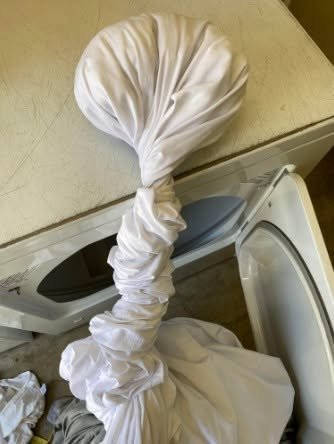
A Simple Routine That Works Well for Most Sheets
You do not need a complicated system.
Try this routine the next time you wash bedding:
- Remove each sheet individually from the washer.
- Shake every piece open.
- Check fitted corners and duvet covers for trapped items.
- Close duvet covers when appropriate.
- Load the dryer loosely rather than packing it full.
- Add a few wool dryer balls if desired.
- Use the heat setting recommended on the care label.
- Pause once during the cycle for large loads.
- Separate and shake the sheets again.
- Remove them promptly when dry.
How to Reduce Wrinkles at the Same Time
Tangling and wrinkling often happen together.
When sheets remain trapped in a tight bundle, the folds become compressed and exposed to heat for an extended period.
Preventing tangles therefore helps reduce wrinkles naturally.
Promptly removing and folding warm sheets also makes a noticeable difference.
Do Not Overdry the Bedding
Continuing to heat sheets long after they are dry may increase wrinkling and unnecessary fabric wear.
If your dryer has a moisture-sensing setting, it may help stop the cycle when the load reaches the desired dryness.
Keep in mind that a tangled load can sometimes confuse drying performance because the outside of the bundle may be dry while the inside remains wet.
Keep the Lint Filter Clean
A clogged lint filter restricts airflow and can make the dryer less efficient.
Clean the lint screen according to the appliance manufacturer’s instructions, typically before or after each load.
Good airflow helps bedding dry more evenly and is also important for proper dryer operation.
Check the Dryer Vent
If loads take unusually long to dry even when they are not overloaded, restricted venting may be part of the problem.
A blocked or poorly functioning dryer vent reduces airflow and can create a safety hazard.
If drying times suddenly increase, the dryer becomes unusually hot, or airflow from the exterior vent seems weak, the vent system may need inspection and cleaning.
Can You Hang Sheets Instead?
Yes. Air-drying sheets on a clothesline or drying rack eliminates the problem of dryer tangling completely.
The practicality of this option depends on weather, available space, local conditions, and the fabric.
Some people partially air-dry sheets and then place them in the dryer for a short finishing cycle to soften the fabric and reduce stiffness.
Frequently Asked Questions
Why do my sheets always end up in one ball?
Large sheets naturally wrap around one another while tumbling, especially fitted sheets with elastic corners and duvet covers with open ends. Overloading the dryer makes this much more likely.
What is the easiest way to stop sheets from tangling?
Shake them out before drying, leave enough room in the drum, avoid mixing them with lots of small clothing, and pause the cycle once to separate them if necessary.
Do dryer balls actually help?
They can help keep fabric layers moving and improve airflow. They are not guaranteed to eliminate tangles, but they can be useful as part of a good drying routine.
How many dryer balls should I use?
The ideal number varies by load size and the product instructions, but several wool dryer balls are commonly used for a normal load of bedding.
Can I dry fitted and flat sheets together?
Yes, as long as the dryer is not overloaded. If tangling remains severe, try smaller loads.
Should I dry sheets with towels?
You can, but it is often better to separate them. Towels are heavier, take longer to dry, and may reduce the freedom of movement that large sheets need.
Should I use high heat for sheets?
Not automatically. Follow the fabric care label. Low or medium heat is suitable for many sheets and can reduce the risk of shrinkage and excessive wear.
Can Air Fluff remove tangles?
It can help after you manually separate the sheets. A short no-heat tumbling cycle with dryer balls may loosen wrinkles and remaining folds.
Why are my sheets still wet after a full cycle?
They may have formed a tight bundle that prevented hot air from reaching the inner layers. Separate the sheets and dry the remaining damp areas again.
How can I keep duvet covers from swallowing other laundry?
Close the buttons, zipper, or snaps before washing and drying when the care instructions permit, and avoid mixing the duvet cover with many small items.
The Bottom Line
You do not need an elaborate laundry trick to stop sheets from turning into a giant fabric knot.
The biggest improvements usually come from giving bedding enough space to move, separating and shaking each piece before drying, using dryer balls if desired, and checking the load once during the cycle.
For most households, three habits make the biggest difference: shake the sheets out, do not overload the dryer, and interrupt tangling before the cycle is finished.
With a little more airflow and a little less crowding, your sheets are far more likely to come out evenly dry, smoother, and ready to fold instead of emerging as the dreaded laundry ball.
“`

CIĄG DALSZY NA NASTĘPNEJ STRONIE
